
Reviewed · SIX BRIDGES DOURO CRUISES
Port : Douro Cruise, 6 Bridges & 4 Port Wines (Max 7)
If you want Porto to feel personal, this Douro cruise is a smart pick. I like how the day mixes 6 bridge views with a guided 4-port tasting, so it is not just scenery. I also like the small group size, max 7, which keeps the pace relaxed and makes questions easy.
One thing to consider is that the tour is not set up for reduced mobility, and parts of the experience lean on stairs and walking around viewpoints. If you are sensitive to crowds or long steps, plan accordingly.
In This Review
- What makes this Douro experience stand out
- Meeting at Marina da Afurada, then easing into the Douro
- Torre dos Clérigos and the 225-step viewpoint question
- Dom Luis I Bridge: the iconic two-deck photo moment
- Ribeira from the river: postcards, but with real life
- Serra do Pilar Monastery: UNESCO circular design you can actually understand
- D. Maria Pia Bridge: the Eiffel-era iron arch story
- Douro Estuary Local Nature Reserve: birds on the East Atlantic Route
- Ending at the mouth of the Douro, where river meets Atlantic
- 4 port wines, and why the pairing approach is worth it
- Hosts Nadia and Paulo: the difference between a tour and a welcome
- Price and value: what you are really paying for at $72.41
- Timing, weather, and what to pack for a comfortable cruise
- Who this tour suits best
- Should you book this Douro cruise?
What makes this Douro experience stand out
- Max 7 people on board for a quieter, more attentive vibe
- 4 port wines built into the flow, not treated like an afterthought
- Bridge spotting with context about what you are seeing and why it matters
- Clérigos Tower viewpoint potential tied to that 225-step climb reputation
- Serra do Pilar UNESCO stop with a circular church and memorable design
- Douro Estuary nature focus where birds move along the East Atlantic Route
Meeting at Marina da Afurada, then easing into the Douro
Your experience starts at Marina da Afurada in Vila Nova de Gaia. The setting is very “real Porto,” not staged for tourists, and Afurada is known for its fishing identity. From here, you slide onto the water and start seeing the city from an angle most people miss.
The best part of the early moments is how quickly you get oriented. Once you’re on the Douro, the bridges stop being random structures and start acting like landmarks that stitch Porto to Gaia.
You will also appreciate the small-group rhythm. When there are only a handful of people on board, the hosts can slow down for questions, and you get more back-and-forth than on the larger boats.
Port cellars worth the detour
- Porto: Douro River Boat Cruise with Port Wine Tasting★ 4.8 · 1,627 reviews
- Porto Douro River Cruise With Port Wine – Daytime or Sunset★ 4.5 · 759 reviews
- Porto: Daytime or Sunset Douro River Cruise With Port Wine★ 4.7 · 714 reviews
Torre dos Clérigos and the 225-step viewpoint question
One of the stops in the experience centers on Torre dos Clérigos, designed by Italian architect Nicolau Nasoni. The tower is over 75 meters tall, completed in 1763, and it began as a bell tower. Over time, it became a landmark for ships and even had strategic military use.
The big practical detail is the 225 steps to the top. If you are comfortable with stairs, this is the payoff, because the view helps you connect what you see from the water with Porto’s upper neighborhoods and rooftops.
If stairs are not your thing, don’t ignore this section. This is one of the clearest reasons the experience is marked as not recommended for reduced mobility, and it can affect how much energy you have left for the rest of the cruise.
Dom Luis I Bridge: the iconic two-deck photo moment
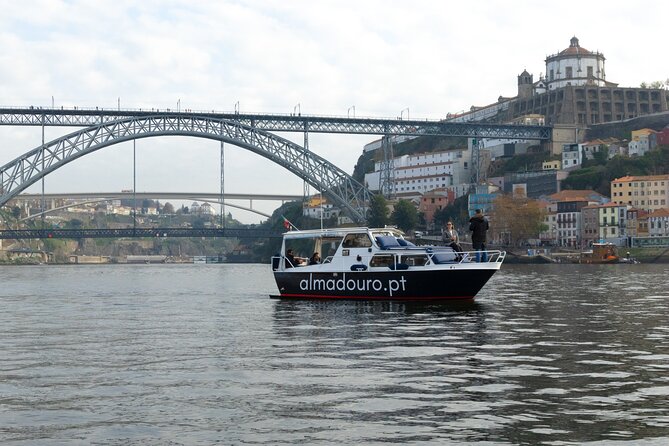
Next up is Dom Luis I Bridge, the metal bridge with two levels that links Porto to Vila Nova de Gaia across the Douro River. Built between 1881 and 1886, it is one of those structures that looks like it was made to be stared at.
In the experience, you spend about 30 minutes around this key crossing. Even if you have seen pictures before, the real advantage is scale. From the water, you feel the bridge’s sweep and the way it frames the river traffic and riverfront streets.
This is also where the guided pieces help. Instead of “that’s a bridge,” you get a clearer sense of how the two sides of the river grew up alongside each other.
Ribeira from the river: postcards, but with real life
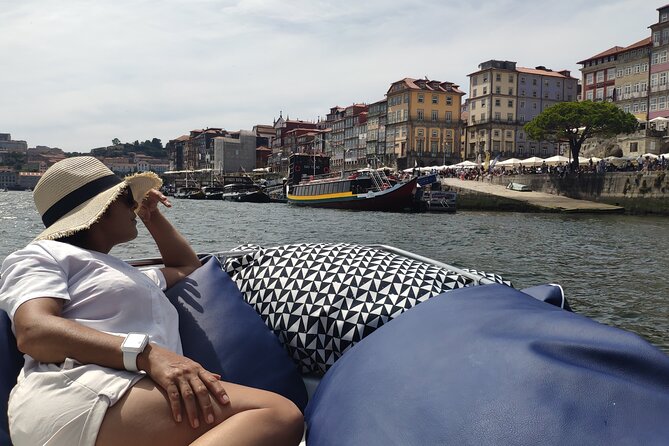
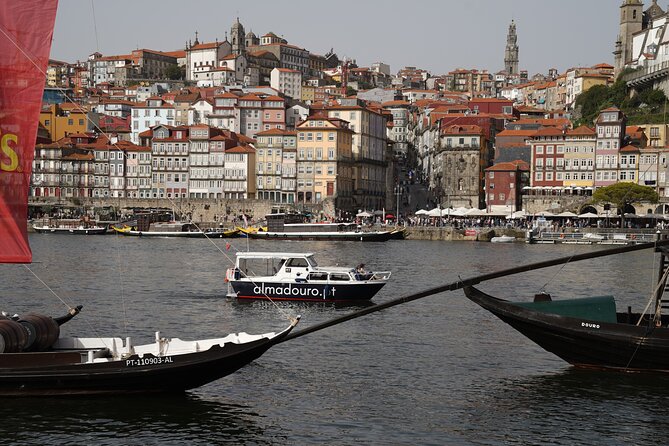
A visit to Ribeira is part of the route, and this is the part that makes Porto click fast. Ribeira is the most colorful and alive postcard area, with streets that feel made for strolling and people-watching.
From the cruise angle, you get something most land-based stops do not: the riverfront as a continuous picture. You see how buildings stack up, how the waterfront curves, and how boats and bridges shape the “line of movement” through the area.
Practical note: Ribeira can be busy at peak times. The river view gives you a calmer perspective, and it also gives you a better sense of where to walk next when you go back on land.
One cruise, six Porto bridges
- Porto: 6 Bridges Douro River Cruise
★ 4.3 · 6,472 reviews - Porto: River Douro 6 Bridges Cruise
★ 4.3 · 4,168 reviews - Porto: Douro River Party Boat with Sunset Option & 6 Bridges
★ 4.7 · 2,040 reviews - Porto Six Bridges Panoramic Cruise on the Douro River
★ 3.5 · 838 reviews
Serra do Pilar Monastery: UNESCO circular design you can actually understand
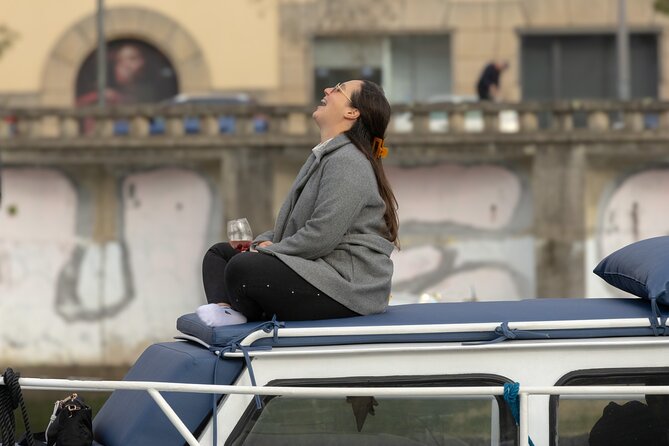
Then you reach Serra do Pilar Monastery, an austere 17th-century church that has been UNESCO World Heritage since 1996. The design is circular, with an imposing hemispherical vault and a balcony ring.
What I like about this stop is how it is explained. The monastery is not just a pretty church, it is a specific design idea that Portugal preserved and shaped. The cloister inside is also circular, covered by a circular vault and supported by 36 Ionic columns.
There is also a human story layer. In 1809, during Napoleonic troop invasions, and later in 1832 to 1833 during the liberal struggles, the location mattered for defense. The site was even elevated to the status of fortress and used as military barracks.
If you like architecture, this is one of the stops that pays off even when you do not have time to linger forever. The circular layout makes it easier to “read” the space, unlike many churches where the view is too busy to track.
D. Maria Pia Bridge: the Eiffel-era iron arch story
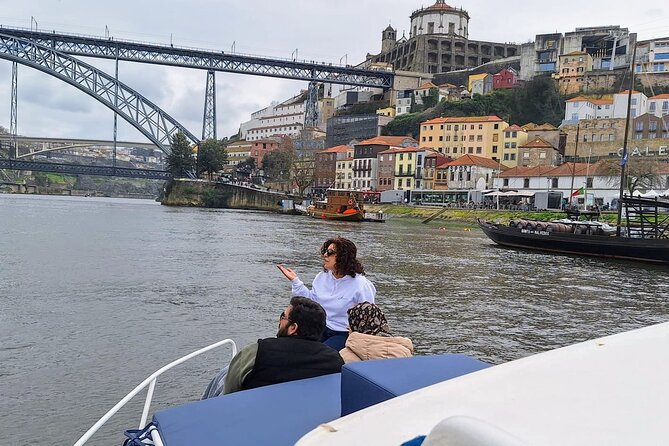
The route also includes D. Maria Pia Bridge, a railway infrastructure that once carried the Northern Line over the Douro. It was inaugurated in 1877 and later closed in 1991, when it was replaced by Ponte de São João.
This bridge is famous in engineering circles for its iron arch scale. It is often described as one of engineer Gustave Eiffel’s greatest masterpieces, and at the time of inauguration it was said to be the largest iron arch in the world. It has also been classified as a National Monument since 1982.
Why this matters for you: bridges are easier to enjoy when you know what kind of problem they solved. Here, you get a story about how rail travel and river crossings pushed engineering forward, and you see the result with the river stretching beneath.
Douro Estuary Local Nature Reserve: birds on the East Atlantic Route
Not everything here is stone and iron. You also spend time near the Douro Estuary Local Nature Reserve, which covers 66.35 hectares on the south bank near Afurada. The reserve includes places like Cabedelo and São Paio bay, along with salt marsh habitat.
The highlight for nature lovers is birds. The area sits along the migratory corridor known as the East Atlantic Route, so you have a real chance to spot birds moving through.
Even if you are not a hardcore birder, this stop is a nice breath between major landmarks. It changes the vibe from “look at the city” to “watch the river system,” and it gives you a different kind of Porto memory.
Ending at the mouth of the Douro, where river meets Atlantic

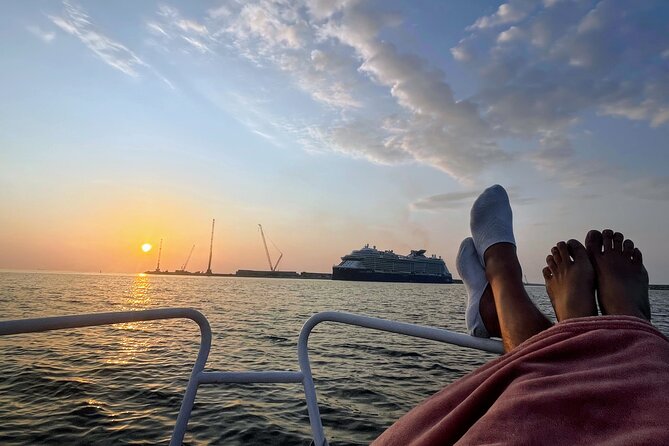
The experience finishes at the mouth of the Douro right near the Atlantic Ocean. This is where the tour’s perspective shift lands. Porto is often about the city, the riverfront, and the wine. Ending at the water’s edge reminds you Porto and Gaia are built on a working coastline.
Depending on the time of day, this can be windy or bright. If it is cooler, the hosts often keep things comfortable with cozy blankets. That detail matters because on open water, weather can change faster than you expect.
4 port wines, and why the pairing approach is worth it
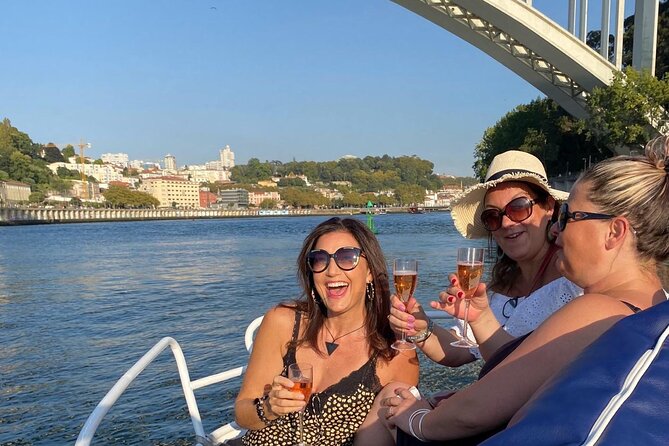
The headline on this tour is the 4 port wines, and the key is how they are introduced. You are not stuck in a dry lecture. The tasting is meant to be fun and guided, with the hosts pairing the wines in a way that helps you taste more than just sweetness.
One of the most praised parts of this experience is the pairing logic. When food helps you pick up notes in a glass, you end up learning without feeling like you are studying. That is especially useful if you only know a couple of port styles.
You will also get snacks alongside the tasting. Based on what I’ve seen in how this experience is run, it often feels like a curated platter experience rather than a rushed add-on. Expect a mix of local bites, and if you are the type who loves grazing while touring, this is right up your alley.
Hosts Nadia and Paulo: the difference between a tour and a welcome
A big reason this cruise earns such strong ratings is the hosting style. Nadia and Paulo run the experience, and it comes across as family-like hospitality rather than scripted performance.
In practice, this means small touches that make a difference on a boat. When the air gets chilly, you’re offered warm blankets. When you have questions, you get straight answers and context tied to what you’re actually looking at in front of you.
It also helps that the narration keeps pace with the scenery. You are not waiting for explanations after the moment has passed. You get stories as you approach or pass landmarks, so the history lands in the right place.
Price and value: what you are really paying for at $72.41
At $72.41 per person for about 2 hours, this can look like a splurge until you break down what is included. You are paying for:
- A small-group boat ride with real time on the water
- 4 port wines as part of the experience
- Snacks and thoughtful service, including comfort items when needed
- Guided context for bridges and landmarks you would otherwise just photograph
Is it cheaper than big group cruises? Often, yes. But big boats usually come with tradeoffs, like less conversation, more waiting, and a more “everyone watch the same thing” feel.
For the cost, what makes it feel fair is the balance. You are not just getting views, you are getting explanations, taste time, and a pace that lets you actually enjoy the river instead of racing through it.
Timing, weather, and what to pack for a comfortable cruise
This is a weather-dependent experience. The operator notes the need for good weather, and if it gets canceled due to poor conditions, you are offered another date or a full refund.
So plan like a Porto traveler who respects the river. Dress in layers. Even on pleasant days, the water breeze can be cooler than it looks from shore.
If you have binoculars, they can help with the bird-focused portions near the estuary. If you do not, you can still enjoy it, because the route is about giving you a chance to spot birds in a meaningful habitat.
Who this tour suits best
This cruise is a great match for you if:
- You want Porto and Gaia from the water without doing a marathon
- You like architecture stories, especially bridges and circular design
- You enjoy wine tastings that stay fun and understandable
- You prefer max 7 over the “everyone line up at the rail” style
It may be less ideal if you need step-free access, since the experience includes a tower climb reputation and walking around key viewpoints. Also, if you are traveling with very young kids, you might find this works well because the boat keeps things visually engaging, but you still need to factor in weather and seating comfort.
Should you book this Douro cruise?
Book it if you want a Porto experience that mixes big views with real guidance and a port tasting that actually helps you taste. The small group cap, the hosting style of Nadia and Paulo, and the way the route connects bridges, riverfront life, and UNESCO design make this more than a standard cruise.
Skip it or think twice if stairs and limited mobility are concerns for your group, or if you dislike weather-driven plans. If that is you, consider an option that has more flexibility and less walking built into the experience.
If you’re choosing one “Douro from Porto” moment, this is the kind that tends to stick because it balances comfort with story, and wine with scenery.
Still Choosing a Wine Tour?
- Porto: Douro Valley with Winery Lunch, Tastings & Cruise★ 4.7 · 7,002 reviews
- Douro Valley: Historical Sites, Wine Experience, Lunch & Cruise★ 5.0 · 5,133 reviews
- Authentic Small Group Douro Wine Tour with Lunch & River Cruise★ 5.0 · 4,775 reviews
The Classic Douro River Cruise
- From Porto: Douro Valley w/ Boat Tour, Wine Tasting & Lunch★ 4.7 · 19,061 reviews
- Complete Douro Valley Wine Tour with Lunch, Wine Tastings and River Cruise★ 5.0 · 12,920 reviews
- Porto: Guided Tour by Tuk-Tuk & Optional Douro River Cruise★ 4.5 · 5,980 reviews
Just added to the valley
- Porto Douro Nature Boat Tour
★ 5.0 · 1 review - Portugal and Spain 9 Days Douro Valley River Cruise
★ 5.0 · 1 review - Private Tour in Douro, with tasting,on a Yacht for up to 5 People
★ 5.0 · 1 review - Private Douro Valley Tour Taylor Made from Porto
★ 5.0 · 1 review - Porto and Douro: Private tour in Yacht
★ 5.0 · 1 review - Private Tour 6 Bridges and Douro 2h opt. sunset, group price up to 6px
★ 5.0 · 1 review
Six Bridges Douro Cruises, compared.
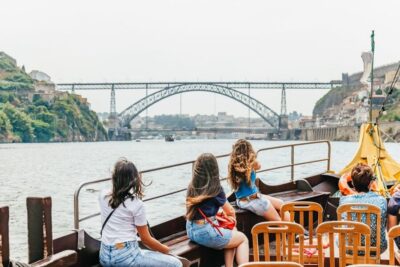
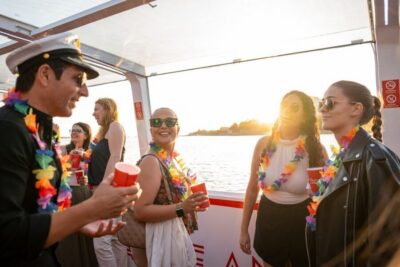
Douro River Party Boat with Sunset Option & 6 Bridges
Read our review →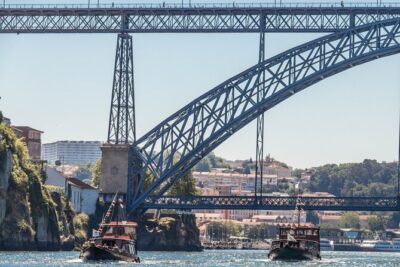
Porto Six Bridges Panoramic Cruise on the Douro River
Read our review →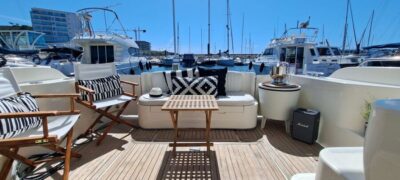
Luxury Yacht Tour of the 6 Bridges and Douro Estuary
Read our review →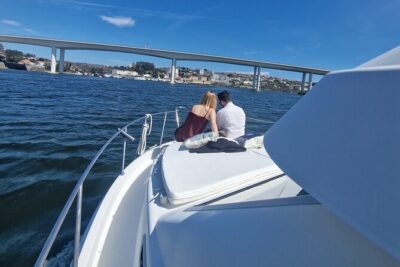
Port : 6 Bridges Cruise , Douro River with Sunset Option
Read our review →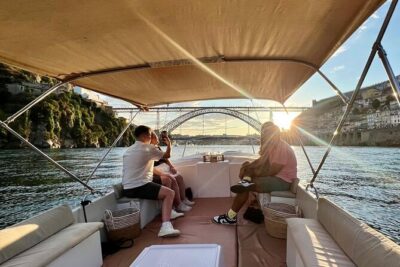
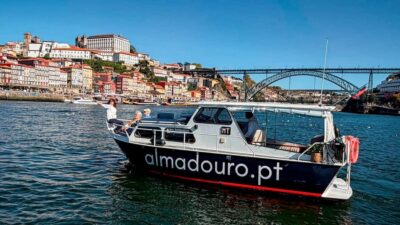
Private Douro River Cruise – 6 Bridges & Sunset
Read our review →More of this kind of Douro day